refreshi

Retail's next margin opportunity is hiding in plain sight
Refreshi Team · July 2026 · 6 min read
South African food retailers will fight to recover fractions of a percentage point in procurement costs. They'll renegotiate supplier terms, restructure logistics, and redesign store layouts to protect margins that often sit below 2%. Yet when edible surplus food approaches the end of its shelf life, most accept a complete loss without first asking whether that value can be recovered.
In a sector where operating margins are razor-thin, that contradiction should be impossible to ignore. Retailers scrutinise every line of expenditure, except the one walking out the back door as waste.
For decades, surplus food has been treated as an unavoidable cost of doing business. Once products near expiry, they're written off under shrinkage or waste. From an accounting perspective, this may appear neat. Commercially, it's anything but. Every unit written off carries embedded capital — logistics, cold-chain energy, water, land use — that never appears as a line-item loss. Retailers aren't just losing product; they're burning invested resources and calling it business as usual.
From ESG report to executive dashboard
Sustainability teams alone have owned this conversation for too long. Food waste isn't a reporting exercise — it's a margin-protection failure, and it belongs to the CFO. It should be tracked with the same discipline as stock turn, gross margin, and sales per square metre.
Surplus food affects profitability, compliance, operational efficiency, customer value, and environmental performance all at once. Few indicators cut across a retail business so directly. Yet in many organisations, food waste is still measured mainly by tonnes diverted, volumes donated, or landfill reduction — important metrics, but ones that don't tell the full commercial story.
How much value was recovered from surplus inventory? How quickly was edible stock redirected before expiry? What percentage of surplus food remained in the value chain?
These are the questions that move food waste from a soft ESG report to a hard-hitting executive dashboard.
The global cost of inaction
International data shows why this matters. The 2026 U.S. Food Waste Report found that surplus food represents US$380 billion in lost economic value annually, with commercial sectors accounting for US$122 billion of that loss. Despite growing awareness, most surplus food still ends up in traditional waste streams, while only a small percentage is successfully rescued. South Africa reflects many of the same structural inefficiencies seen globally — more than one-third of all food produced locally is lost or wasted before it reaches consumers. That's not only an environmental problem, but a significant commercial failure.
Regulation is coming for the write-off
That blind spot is about to become more expensive, too. The Western Cape government has already adopted a zero organic waste mandate, aimed at eliminating organic matter — food and garden waste — from landfills by 2027. The draft National Waste Management Strategy 2026 signals that similar pressure will extend nationally, with increasing focus on circular economy principles and landfill restrictions.
As compliance costs rise, retailers that continue treating surplus as a passive write-off will face growing financial exposure. The era of burying the problem — literally — is ending. Retailers that don't shift to tech-enabled surplus monetisation within the next 18 months will find themselves paying twice: once in lost product value, and again in landfill compliance penalties. The window to act voluntarily is closing fast.
Recover value before it becomes waste
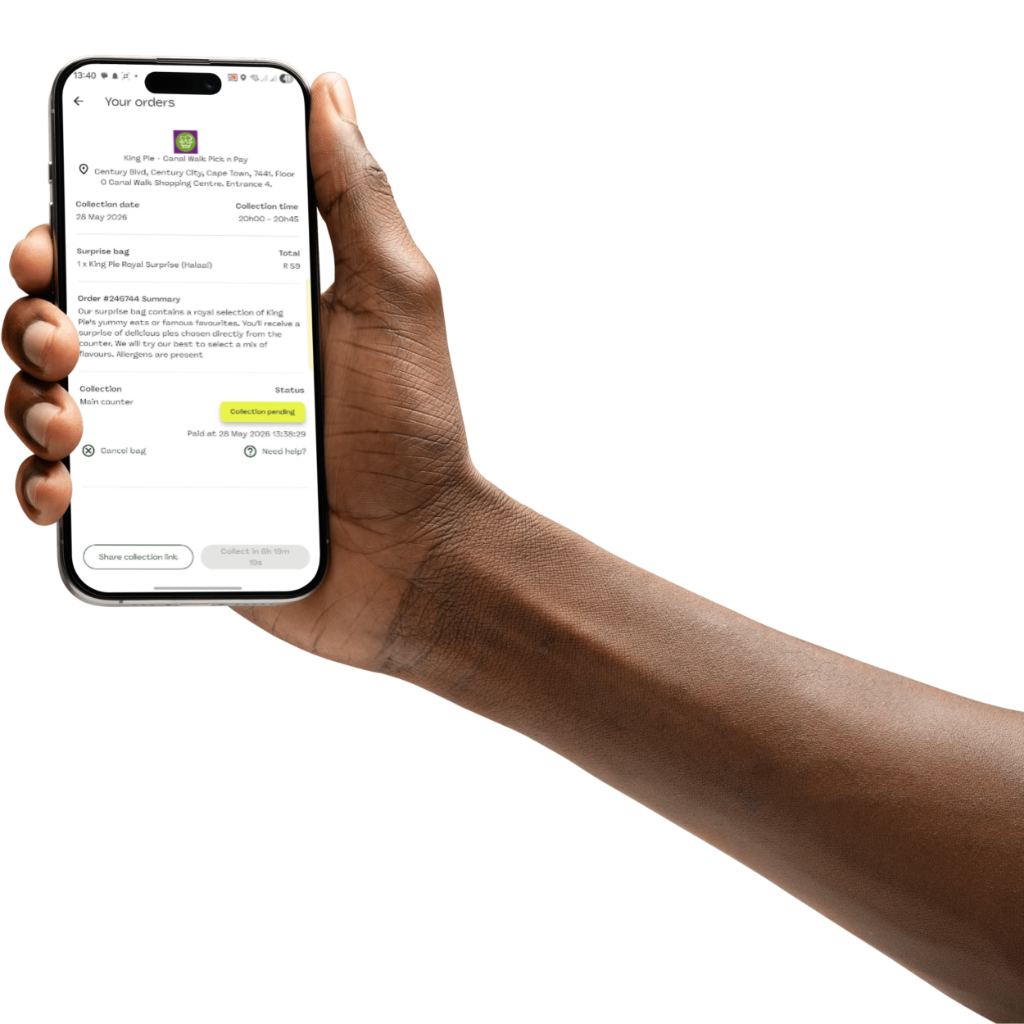
The opportunity here is to manage surplus food before it becomes waste — recovering revenue on what retailers would otherwise consider a stranded asset, while driving physical foot traffic back to stores. Not only through charity logistics, but by creating an additional commercial pathway for edible food that might otherwise leave the system entirely.
The retailers that lead over the next decade won't simply be those that dispose of surplus more efficiently. They'll be the ones that measure it, manage it, and recover value from it. Because once food waste becomes a KPI, it stops being an invisible loss — it becomes an ownable business performance issue.
The retailers that embrace this shift earliest will gain more than incremental revenue recovery. They'll build stronger forecasting capabilities, improve inventory visibility, reduce operational inefficiencies, and create more agile supply chains. In an increasingly competitive retail environment, the ability to extract value from every stage of the product lifecycle will separate high-performing businesses from those still relying on traditional write-off models.
Surplus management should no longer be viewed as a downstream operational task, but as a strategic capability that strengthens commercial resilience. This is ultimately a leadership decision. Every major efficiency gain in retail has started with executives choosing to measure something differently. Shrinkage, stock availability, procurement and logistics all became board-level priorities because they were recognised as drivers of financial performance. Surplus food deserves the same treatment.
The businesses that act now won't simply waste less — they'll build more profitable, resilient and future-ready organisations.
In the years ahead, recovering value from surplus food is unlikely to be viewed as an innovation. It will simply be regarded as good retail management.
More from the Refreshi blog
ESG Made Simple: How Your Surplus Strategy Counts Toward Sustainability Reporting
If you're on Refreshi, you're already generating ESG data — with every single bag you sell.
7 min readImpact & News173,000 bags rescued. R11.3M generated. Here's the full picture.
Our first full impact report — real numbers from real partners across every food sector.
8 min readFood Waste FactsWhat Happens to Unsold Food at Your Favourite Restaurant?
Every evening, food businesses are left with surplus. Here's the truth about where it goes.
5 min read

We use cookies to improve your experience and measure our impact. Read our Cookie Policy.