refreshi

Best Before vs Use By: What Those Dates Actually Mean — And When It's Safe to Ignore Them
Refreshi Team · June 2026 · 5 min read
Every day, South Africans throw away perfectly good food because of a date printed on a label. In fact, misunderstood date labels account for a significant share of household food waste globally — yet most of us have never been taught what those dates actually mean.
Here's the truth: "Best Before" and "Use By" are not the same thing. Confusing them costs you money, wastes food, and contributes to South Africa's R60 billion annual food waste problem.
What does "Best Before" actually mean?
A Best Before date tells you when a product is at its best quality — its peak taste, texture, and nutritional value. It does not mean the food is unsafe after that date. If stored correctly and unopened, many foods are perfectly safe to eat days, weeks, or even months after their Best Before date.
The official rule: look, smell, and taste before you waste.
What does "Use By" mean?
A Use By date is a food safety date — not a quality date. These appear on products where the risk of harmful bacteria growth is real: raw meat, fish, seafood, and certain dairy products. Use By dates should be respected. If in doubt, throw it out.
How long after Best Before is food actually safe?
The answer depends on the product. Here's a practical guide:
Canned goods: Often safe for years beyond the Best Before date thanks to the sterilisation process.
Dried pasta and rice: Stored dry and sealed, often good for 2–3 years past the printed date.
Chocolate: Can last months or years beyond Best Before. White bloom on chocolate is just fat rising to the surface — it's still safe to eat.
Hard cheese: Cut away any mould (about 1cm around the spot) and the rest is fine.
Eggs: If stored in the fridge, eggs can be safe for up to 3 weeks after their Best Before date. Test with the water float method: if the egg sinks, it's fresh; if it floats, it's time to compost it.
Frozen food: Quality may decline, but frozen food is generally safe well beyond its Best Before date.
Yoghurt: A few days past Best Before is usually fine if it smells normal and shows no mould.
Bread: Best Before is about softness and freshness. Stale bread is still perfectly safe and makes great toast, French toast, or breadcrumbs.
"Look, smell, and taste before you waste. Most food is far safer than the label suggests."
What does this have to do with Refreshi?
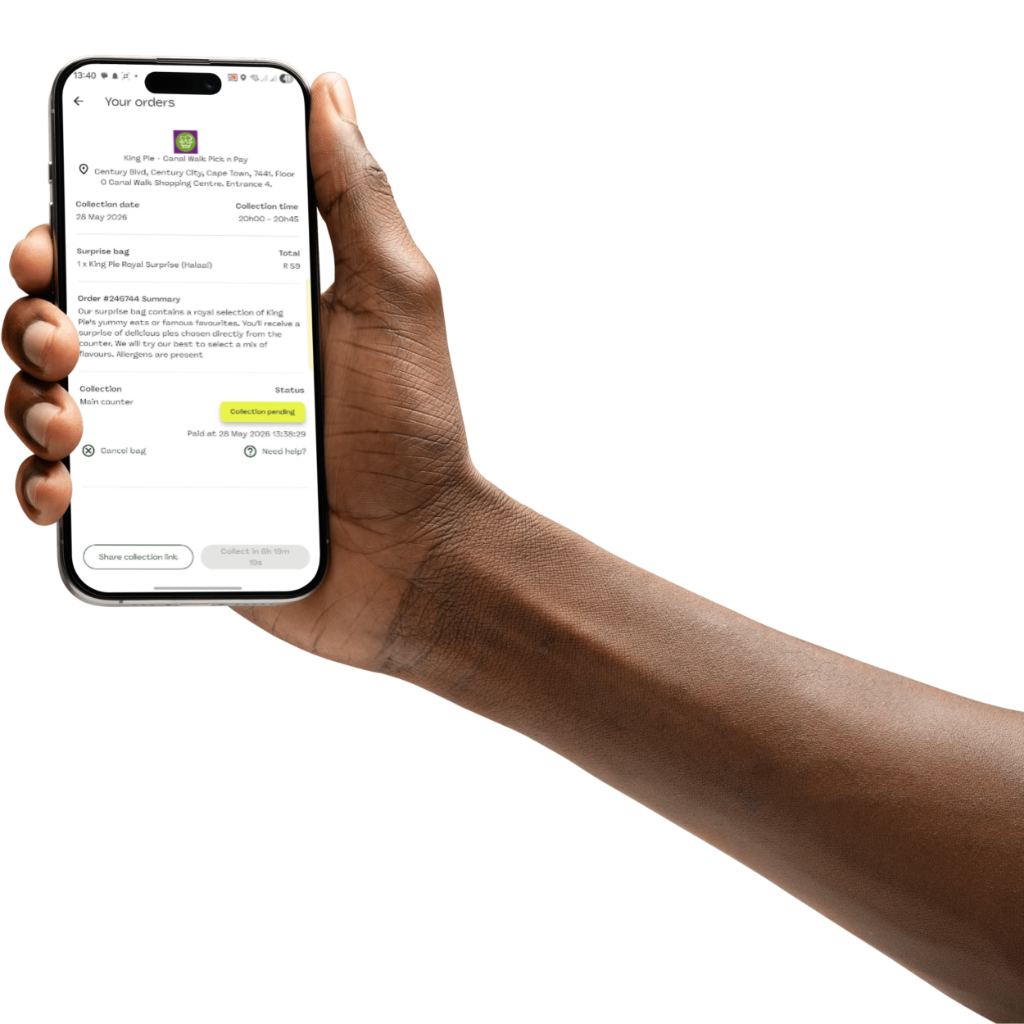
Every Surprise Bag on Refreshi contains food that is safe to eat — often food that is at, or just approaching, its Best Before date. This is surplus food that hasn't sold during the trading day: freshly baked goods, prepared meals, deli items, and fresh produce that would otherwise go into a bin at closing time.
None of it has passed a Use By date. It's simply food that needs to find a home before it goes to waste.
The Refreshi app connects you to that food — at up to 50% off the retail price — from stores you already trust.
Get your first Surprise Bag today.
Download the free Refreshi app and start saving food — and money — from stores near you.
A note on food safety at Refreshi
Every partner store on Refreshi signs and adheres to our Food Safety Guidelines before going live on the platform. These guidelines cover storage temperatures, handling standards, allergen disclosure, and collection hygiene. If you ever have a concern about a bag, contact us at support@refreshi.co.za within 24 hours.
You can also read our full Food Safety Recommendations for Users at refreshi.co.za/food-safety-users.
External reference: South African Consumer Protection Act | WHO Five Keys to Safer Food
More from the Refreshi blog
What's Actually Inside a Refreshi Surprise Bag?
First-timer nerves are real. We get it. Here's exactly what to expect inside your Surprise Bag.
4 min readFood Waste Facts5 Things You Didn't Know About Food Waste in South Africa
South Africa wastes 10 million tonnes of food every year. Here are five facts that will change how you think.
5 min readTips & TricksHow to Save R1,000+ a Month on Food Without Compromising on Quality
With food inflation biting, here are the strategies that actually work.
6 min read

We use cookies to improve your experience and measure our impact. Read our Cookie Policy.